Packaging is one of the most underrated aspects of running a successful e-commerce business. Good packaging protects your product during transit, reduces return rates, and creates a memorable unboxing experience that leads to positive reviews. In this guide, we cover everything Indian sellers need to know about professional order packaging.
Why Packaging Matters More Than You Think
According to industry data, 15-20% of e-commerce returns in India happen due to damaged products during transit. Most of this damage is preventable with proper packaging. Additionally, platforms like Flipkart and Amazon penalize sellers who receive frequent "damaged product" complaints — it affects your seller rating and can lead to account restrictions.
Essential Packaging Materials for Sellers
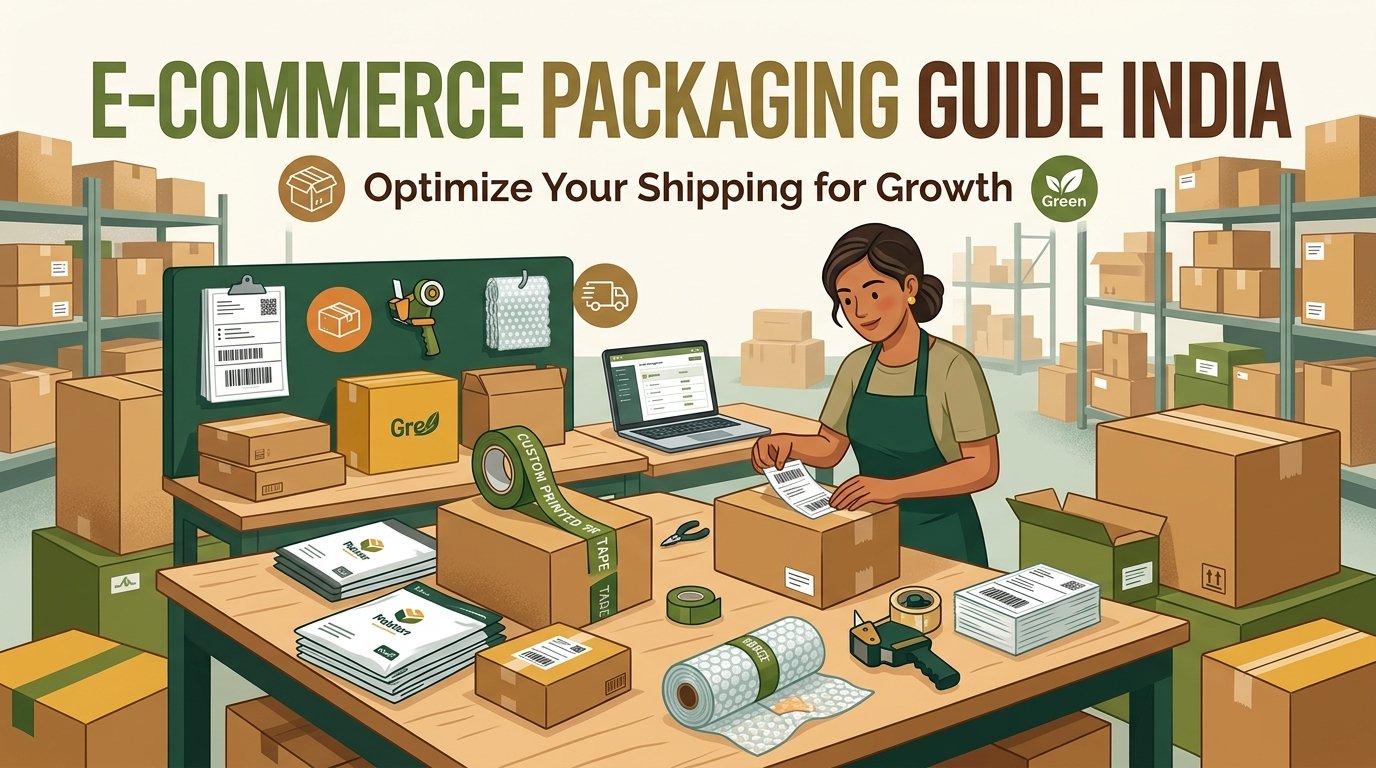
Here is what every e-commerce seller should have in their packing station:
- Courier bags (flyer bags): ₹2-4 per piece. Available in sizes 6x8, 8x10, 10x12, 12x16 inches. Use for clothing, accessories, and lightweight items.
- Corrugated boxes: ₹8-25 per piece depending on size. Essential for fragile items like electronics, glassware, and ceramics.
- Bubble wrap: ₹150-300 per roll (10m). Wrap fragile items with 2-3 layers before placing in the box.
- Packing tape: ₹40-60 per roll. Use brown tape for boxes, transparent tape for sealing flyers.
- Thermal labels: ₹500-800 per 1,000 labels. For printing shipping labels with your thermal printer.
- Thank you cards: ₹1-2 per card. Optional but highly recommended for building customer loyalty.
Platform-Specific Packaging Rules
Meesho Packaging Guidelines
- Every order must be in a tamper-proof package (sealed courier bag or taped box)
- The shipping label must be clearly visible on the outside
- Include the product inside a polybag before placing it in the courier bag for moisture protection
- Do not include your own branding/marketing materials inside Meesho orders — it violates their seller agreement
Flipkart Packaging Guidelines
- Use only the approved courier bag or box sizes listed in your seller dashboard
- The EKart shipping label must be pasted on the flat surface of the package (not on folds or edges)
- For clothing: product should be folded neatly, placed in a polybag, then in the courier bag
- For electronics: use a corrugated box with bubble wrap — never ship in just a flyer bag
Amazon Packaging Guidelines
- Amazon has the strictest packaging standards — non-compliance can lead to account health warnings
- Use "Prep-free" eligible packaging when possible to avoid Amazon charging you prep fees
- All packages must pass a 1-meter drop test — if the product breaks when dropped from 1 meter, your packaging is insufficient
- Include a packing slip inside the box (EasyOrderLabel's CSV export can help generate these)
The Packing Workflow: Step by Step
Here is the most efficient packing workflow used by professional sellers:
- Sort labels first: Upload your shipping PDF to EasyOrderLabel and download the sorted version. This groups all same-product labels together.
- Print sorted labels: Feed the sorted PDF into your thermal printer.
- Review the SKU summary: Check the quantity table to know exactly how many of each product and size you need.
- Pick products in bulk: Go to the shelf and pick ALL units of one SKU at once (e.g., pick 15 Blue Kurtis in all sizes).
- Match and pack: Match each label to the correct product by SKU and size. Place product in polybag, then in courier bag, paste the label.
- Quality check: Before sealing, verify the product matches the label (correct SKU, size, and color).
- Seal and stack: Seal the package, stack for courier pickup.
Cost-Saving Packaging Tips
- Buy materials in bulk from IndiaMART: Prices are 30-50% lower than Amazon/local shops.
- Reuse boxes from incoming shipments: Remove old labels, add your own — eco-friendly and free.
- Right-size your packaging: Don't use a 12x16 bag for a small phone case. Oversized packaging increases volumetric weight and shipping costs.
- Skip unnecessary inserts: Unless your brand strategy requires it, skip tissue paper and fancy inserts. They add cost without reducing returns.