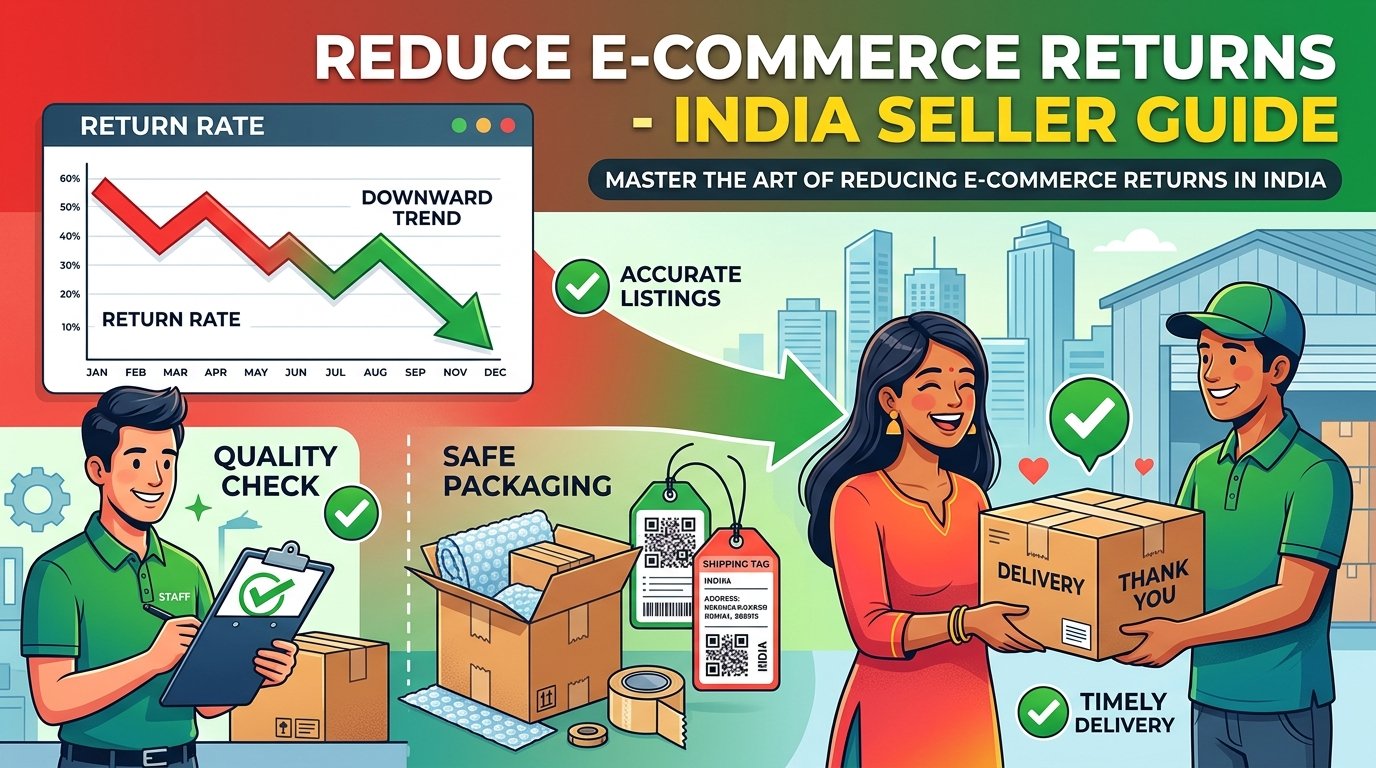
Returns are the silent profit killer for e-commerce sellers in India. On platforms like Meesho and Flipkart, return rates can range from 15% to 40% depending on the category. For clothing sellers, it is even higher. Every return means you lose the shipping cost (both ways), the packaging cost, and often the product itself comes back in unsellable condition. In this guide, we share 10 proven strategies to dramatically reduce your return rate.
1. Write Accurate Product Descriptions
The number one reason for returns is "product not as described." If your listing says "pure cotton" but the fabric is a cotton blend, customers will return it. Be brutally honest in your descriptions:
- Mention exact fabric composition (e.g., "60% Cotton, 40% Polyester")
- Include actual dimensions in cm, not just S/M/L
- Mention if colors may vary slightly from photos
2. Add Detailed Size Charts
"Size didn't fit" accounts for 30-40% of clothing returns. Create a size chart with actual measurements in inches and centimeters. Include chest, waist, hip, length, and shoulder measurements for each size. Many successful sellers also add a "How to Measure" section with a simple illustration.
3. Use High-Quality Product Photos
Invest in good lighting and take photos from multiple angles. Show the product on a model or mannequin so customers can judge the fit. Include close-up shots of the fabric texture, stitching, and any special details like embroidery or prints.
- Minimum 5-6 images per listing
- One flat-lay photo showing the full product
- One close-up of fabric/material quality
- One photo showing the product being worn (for clothing)
4. Implement Quality Control Before Dispatch
Before packing each order, do a 30-second quality check:
- Verify the SKU and size match the shipping label
- Check for visible defects (loose threads, stains, damage)
- Confirm the product folds neatly and looks presentable
- Ensure zippers, buttons, and clasps work properly
This simple step alone can reduce "defective product" returns by 50%.
5. Sort Labels by SKU Before Packing
When labels are randomly ordered, packers rush and make mistakes — putting a Medium shirt in a Large label, or shipping the wrong color entirely. By using EasyOrderLabel to sort your labels by SKU and size before printing, your packing team works sequentially through one product at a time. This eliminates cross-SKU mixing errors and reduces wrong-item returns significantly.
6. Package Products Properly
Damaged products during transit are 100% preventable. Use appropriate packaging:
- Clothing → polybag + courier bag (never loose in just a courier bag)
- Electronics → bubble wrap + corrugated box
- Fragile items → double boxing with foam padding
- Cosmetics → sealed in plastic to prevent leaks
7. Dispatch Orders Quickly
The longer you take to ship, the higher the chance of cancellation and return. Aim for same-day dispatch for orders received before 2 PM. Quick dispatch means the customer gets their product while they are still excited about the purchase.
8. Include Thank You Cards with Care Instructions
A small thank you card (₹1-2 each) creates a personal connection with the customer. Include wash care instructions for clothing — many returns happen because customers wash a "dry clean only" garment incorrectly and blame the seller for poor quality.
9. Offer Customer Support via WhatsApp
Many customers return products simply because they don't know who to contact for help. Adding a small slip with your WhatsApp support number gives unhappy customers an alternative to returning. Often, a simple size exchange or a small discount on the next order is enough to prevent a return.
10. Analyze Return Data Monthly
Track your returns in a spreadsheet or use the platform's analytics dashboard. Identify:
- Which products have the highest return rate?
- What are the most common return reasons?
- Which sizes get returned the most? (Indicates sizing chart issues)
- Are returns higher from specific cities or pin codes?
Once you identify patterns, take action: fix the listing, update the size chart, improve packaging, or discontinue consistently problematic products.
The Bottom Line
Reducing returns is not about one magic trick — it is about consistently doing the basics right. Accurate listings, proper packaging, sorted label printing, and quality checks before dispatch. Tools like EasyOrderLabel help you sort and organize your shipments, which directly reduces wrong-item and wrong-size errors. Start implementing these 10 tips today and watch your return rate drop within weeks.